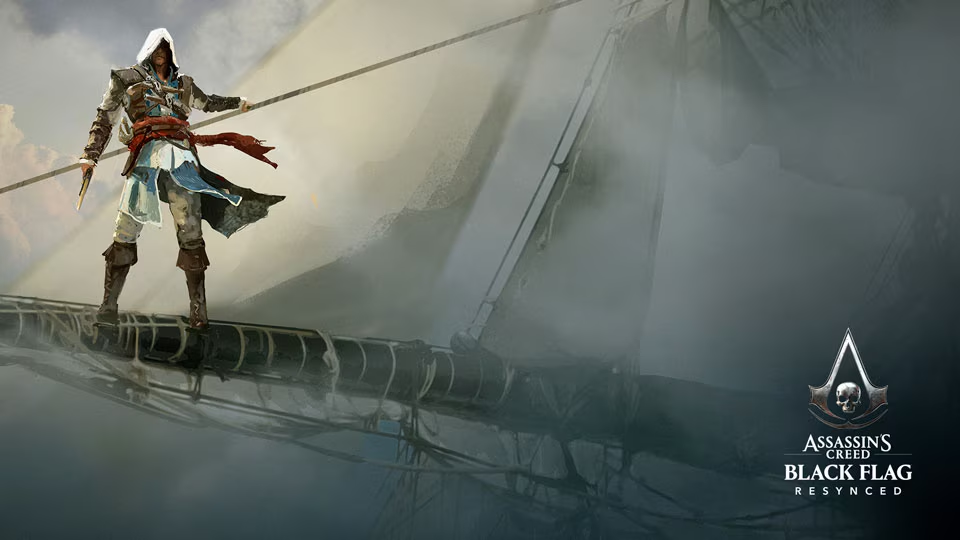
Assassin’s Creed Black Flag Resynched: Ubisoft’s Attempt to Rebuild Trust

Assassin’s Creed Black Flag Resynched aims to revive the naval adventure that made Black Flag iconic, but it must prove Ubisoft still understands why that formula worked.

A Return to One of Assassin’s Creed’s Most Loved Eras

After several years of mixed reception and declining investor confidence, Ubisoft is returning to one of the most celebrated entries in the franchise. Assassin’s Creed Black Flag Resynched revisits the foundation established by Assassin’s Creed IV: Black Flag, a title widely remembered for its naval exploration and pirate fantasy. For many players, Black Flag represented a moment when the series expanded its identity while still retaining a clear direction.

Recent Assassin’s Creed entries shifted heavily toward RPG systems, large open maps, and long progression loops. While those games attracted new audiences, they also divided long-time fans who preferred the tighter structure of earlier titles. Resynched therefore arrives at a moment where the franchise must balance nostalgia with modern design expectations.
Revisiting the Pirate Fantasy

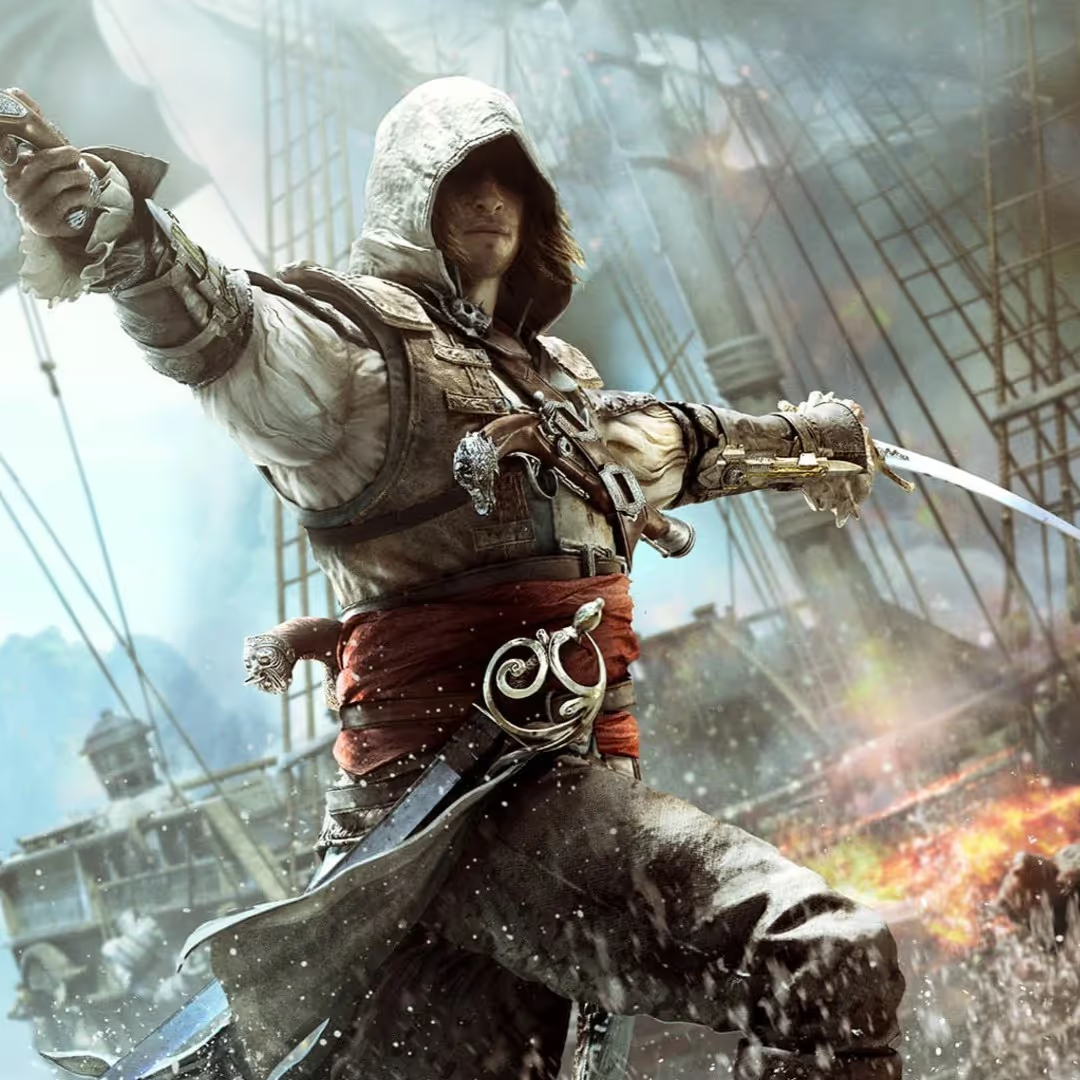
Black Flag’s success came largely from how seamlessly it blended naval exploration with traditional Assassin’s Creed gameplay. Sailing across the Caribbean, engaging in ship battles, and boarding enemy vessels created a rhythm that felt both adventurous and mechanically satisfying. These systems became the defining identity of the game.

Resynched appears to lean heavily into that legacy. Early information from Ubisoft suggests a focus on preserving the atmosphere and structure that made Black Flag memorable while updating the presentation for modern hardware. The challenge will be modernizing the experience without losing the pacing and simplicity that originally made the naval systems so compelling.

The Question of RPG Influence

One of the biggest uncertainties surrounding Resynched is how much influence the franchise’s newer RPG direction will have. Recent games such as Assassin’s Creed Valhalla emphasized gear progression, skill trees, and expansive maps filled with repeated activities. While those systems increased scale, they also shifted the franchise away from its earlier design identity.

If Resynched remains faithful to Black Flag’s structure, the focus may stay on exploration, story progression, and naval encounters rather than extensive RPG mechanics. However, Ubisoft may still incorporate some modern systems to align the remake with current player expectations. Finding the right balance between modernization and preservation will likely determine how the project is received.

Naval Combat, Reputation, and the Shadow of Skull & Bones

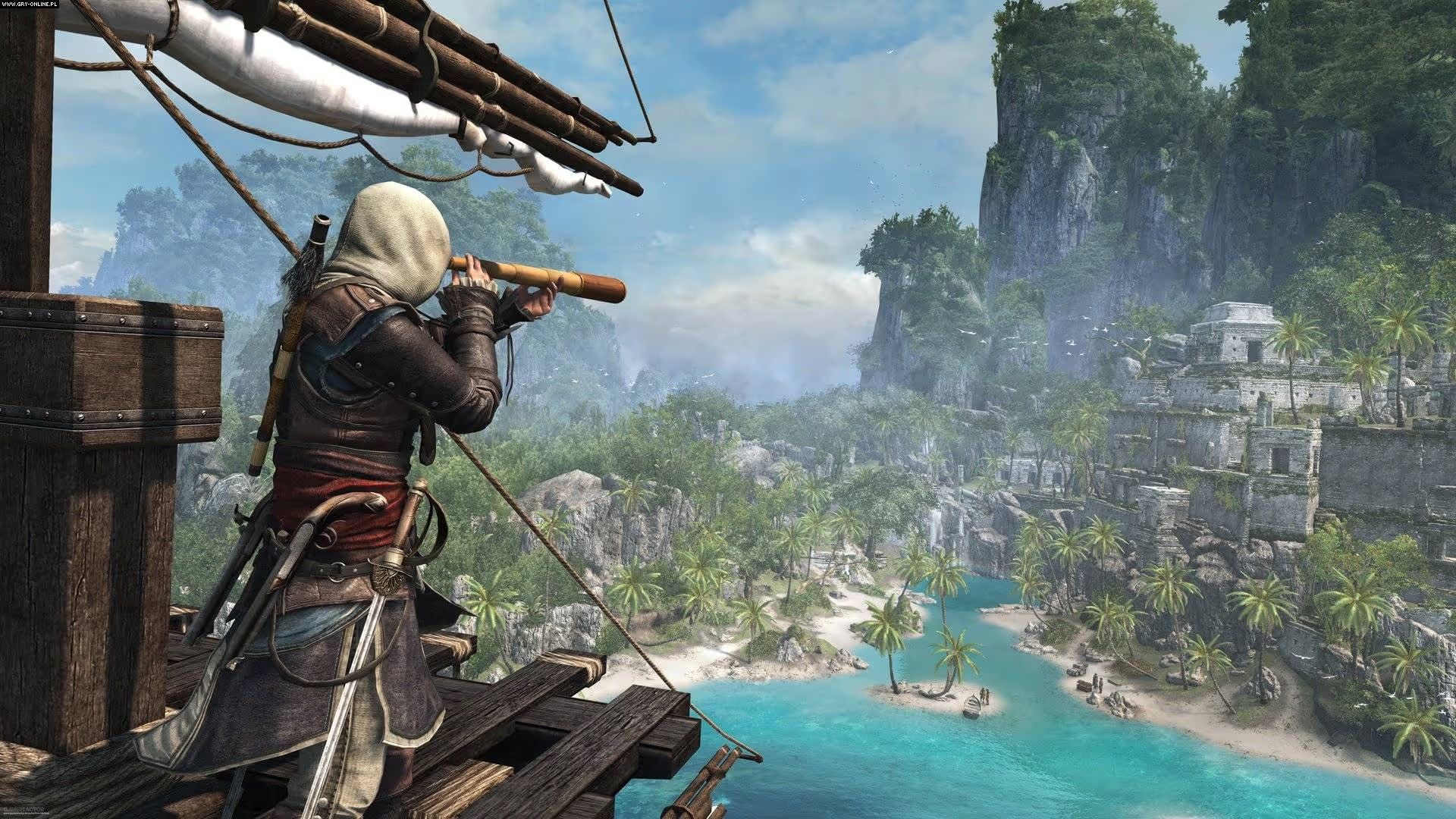
Naval gameplay is the central pillar that made Black Flag stand out within the Assassin’s Creed series. Ship maneuvering, cannon positioning, and boarding mechanics created encounters that felt tactical but accessible. Players quickly learned the rhythm of combat while still feeling the weight of commanding a powerful vessel.

Because of that legacy, expectations for Resynched are closely tied to how well Ubisoft can recreate that experience. The systems were once a benchmark for naval combat in open-world games, and players will expect them to feel just as engaging today.

A Formula Ubisoft Once Mastered

The naval mechanics in Black Flag worked because they balanced spectacle with clarity. Sailing felt fluid, wind direction mattered, and battles rewarded positioning rather than raw statistics. Players could approach encounters strategically without needing complex systems to understand the flow of combat.

If Resynched successfully rebuilds these mechanics with modern visuals and improved responsiveness, it could remind players why the original formula worked so well. A faithful recreation may actually be more appealing than radical reinvention. Sometimes the strength of a system lies in its simplicity.

Lessons from the Failure of Skull & Bones

The conversation around naval gameplay inevitably brings attention to Skull and Bones, another Ubisoft project built around pirate combat. Despite a long development cycle, the game launched to lukewarm reception and struggled to capture the excitement players once felt in Black Flag. Many critics noted that its ship combat lacked the sense of freedom and adventure that originally defined Ubisoft’s naval design.

One of the most common criticisms was the absence of land-based exploration and the limited scope of its systems. By isolating ship combat without the broader adventure structure, Skull and Bones highlighted how important context was to the success of Black Flag. Naval mechanics alone were not enough.

Resynched therefore carries additional pressure. If Ubisoft can rediscover the balance between exploration, combat, and storytelling that made Black Flag work, the project could help restore confidence in the studio. If it fails to capture that magic again, it may reinforce concerns about the company’s recent creative direction.

Sources

• Ubisoft— Assassin’s Creed Resynched developer update

• Ubisoft official Assassin’s Creed news page

• Industry coverage discussing Skull and Bones reception

• Historical coverage of Assassin’s Creed IV: Black Flag gameplay systems