Why Modern MMORPGs Struggle While Older Ones Continue to Survive

Older MMORPGs continue to thrive because of established communities and stable systems, while new MMOs struggle to build lasting player populations.

A Genre Built on Long-Term Commitment

Massively multiplayer online games were once among the most dominant forces in the gaming industry. Titles such as World of Warcraft, Old School RuneScape, Guild Wars 2, and The Lord of the Rings Online built persistent worlds where players invested thousands of hours over many years. Progression systems, social guild structures, and shared events created communities that often lasted longer than the hardware players originally used to access them.

What made these early MMORPGs successful was not just scale, but routine. Logging in daily to complete quests, trade resources, or participate in group activities became part of a player’s schedule. Over time those routines formed stable communities that reinforced the longevity of the game world.
The Power of Established Worlds

Once a player invests years into a character, leaving that ecosystem becomes difficult. Progression, cosmetic collections, guild relationships, and accumulated knowledge create powerful switching costs. A new game must offer more than novelty to convince players to abandon that investment.

This dynamic helps explain why older MMORPGs remain resilient. Games like World of Warcraft and Old School RuneScape continue to receive updates while preserving the structure that originally attracted their communities. Instead of competing for entirely new audiences, they maintain ecosystems that already function.

Nostalgia Is Only Part of the Story

It is easy to assume that nostalgia alone keeps older MMORPGs alive. While nostalgia certainly contributes, the deeper reason is stability. These games have refined their systems over many years, smoothing out friction points and building predictable content cycles.

Players know what they are returning to. The structure of progression, social interaction, and content updates remains familiar, which reinforces long-term engagement. In contrast, many newer MMORPGs attempt to reinvent the genre without first establishing the community foundations that older games built slowly.
Why New MMORPGs Struggle to Survive

Launching a modern MMORPG is one of the most difficult projects in game development. The genre requires enormous technical infrastructure, constant content updates, and a player base large enough to populate shared worlds. Without sustained engagement, the entire ecosystem can quickly feel empty.

Recent examples illustrate how fragile that balance has become. Even highly anticipated projects struggle to maintain momentum once the initial launch excitement fades.

The Collapse of New World

New World initially launched with enormous interest, drawing hundreds of thousands of players during its early weeks. The game offered large-scale faction warfare, crafting systems, and open-world PvP that suggested a new long-term MMORPG ecosystem.

However, maintaining that population proved difficult. Over time the player base declined significantly, and server consolidation became necessary to keep worlds active. Eventually, the situation reached a point where Amazon Games confirmed that New World’s servers are scheduled to shut down permanently in 2027. The announcement reflects how even a well-funded MMORPG can struggle to maintain the population required for a persistent online world.

Uncertainty Around Ashes of Creation

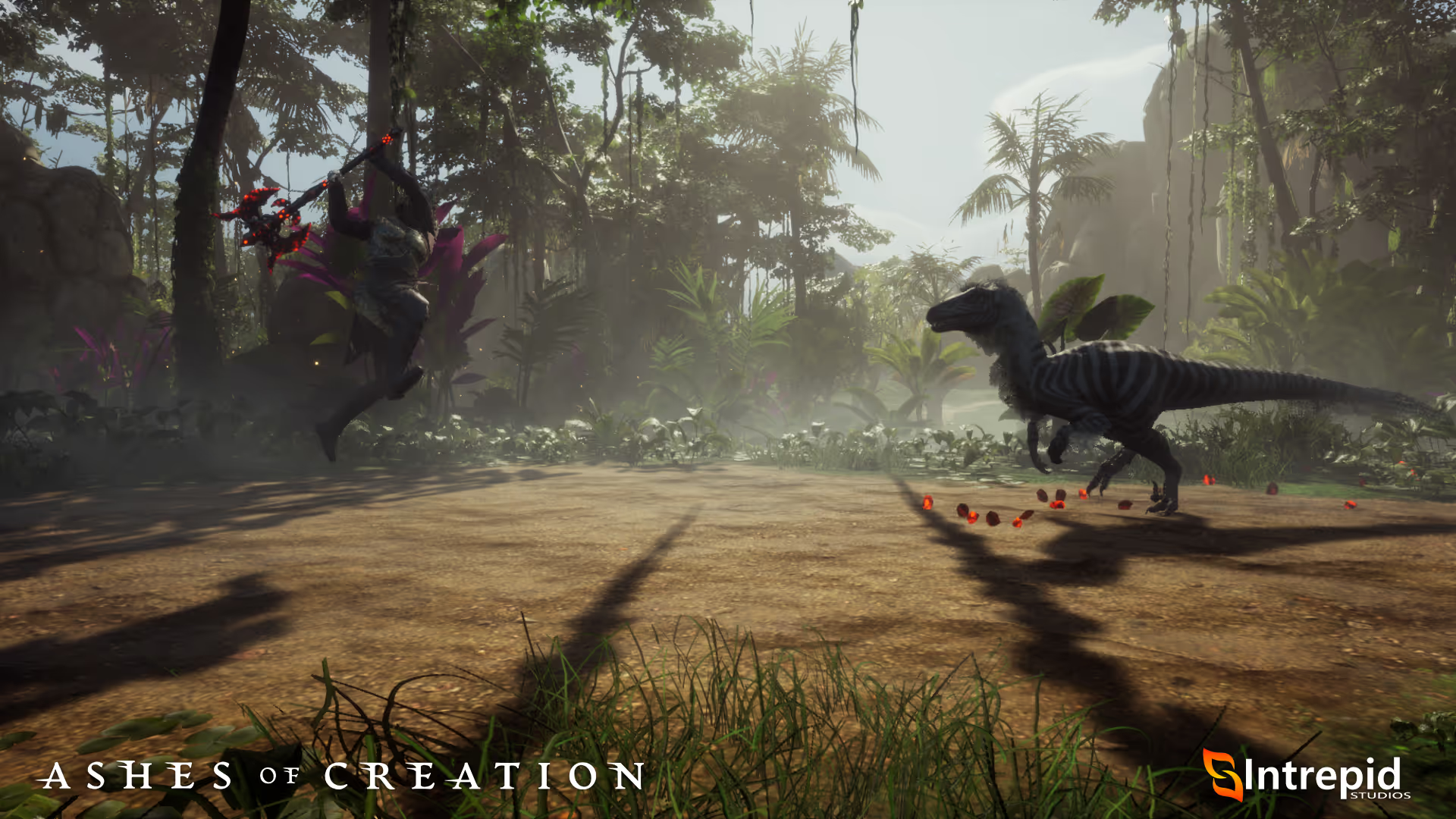
Another high-profile example is Ashes of Creation, a project that has attracted significant attention through crowdfunding and ambitious design promises. The game aims to introduce large-scale dynamic world systems where player actions reshape the political and economic structure of the environment.

Despite those ambitions, the project has also faced internal challenges that raise questions about its future. Development complexity, organizational issues, and the sheer scale of its systems have created uncertainty around whether the game will launch in its intended form. In some scenarios, there is a real possibility that the project may struggle to reach full release.

These examples illustrate a broader reality facing the genre. MMORPGs require years of stability to build lasting communities, yet modern development cycles often place enormous pressure on projects before those communities have time to form. Older games succeeded by growing slowly over time. New ones are expected to succeed immediately, and many cannot survive that expectation.

Sources

• Blizzard Entertainment — World of Warcraft official updates and historical coverage

• Jagex — Old School RuneScape development blogs and community reports

• ArenaNet — Guild Wars 2 expansion announcements and player updates

• Amazon Games — New World development updates and server shutdown announcement

• Intrepid Studios — Ashes of Creation developer communications and project updates