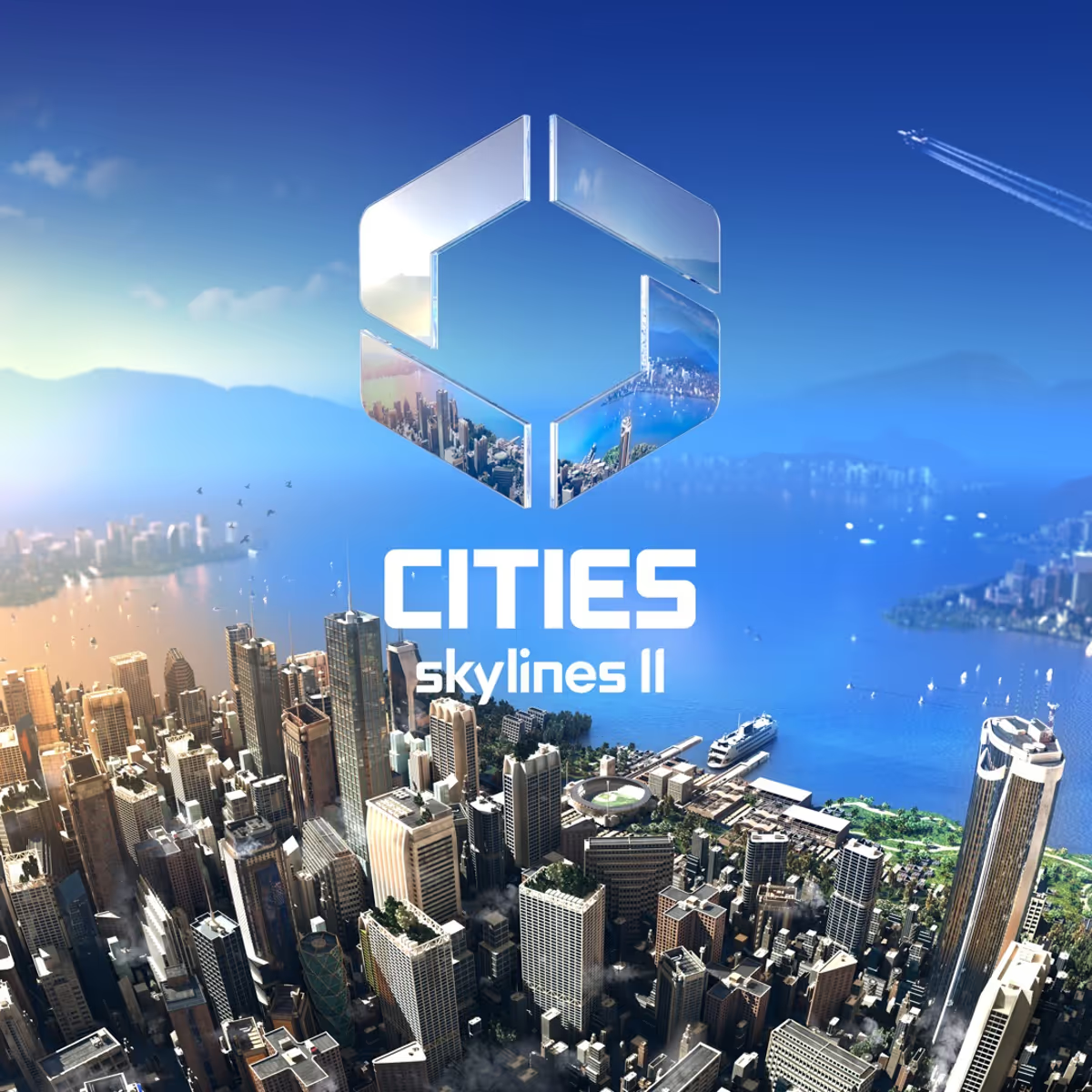
Cities: Skylines II is a city-building simulation where players design, manage, and expand a modern city. Players must balance infrastructure, economy, and citizen needs while planning roads, services, and districts. The game emphasizes detailed urban planning and large-scale city management.

• The game uses a premium base purchase model with paid expansion content.
• Content packs and DLC introduce additional systems and assets over time.
• There are no direct pay-to-win mechanics, but the expanding DLC model increases total cost.
• The experience is fully single-player with no multiplayer modes.
• All progression systems are self-contained within sandbox play.
• There are no online dependencies for core gameplay.
• City growth requires sustained zoning adjustments and infrastructure expansion.
• Traffic and service balancing demand repeated iteration and redesign.
• Large cities increase micromanagement load over extended play sessions.
• Simulation systems track detailed economic, demographic, and traffic behaviors.
• Infrastructure tools allow granular road, transport, and service planning.
• Policy layers and taxation systems influence long-term city stability.
.avif)
.avif)
.avif)
Cities: Skylines II delivers a highly detailed urban simulation centered on traffic management, economic systems, and large-scale infrastructure planning, offering deep systemic control for patient players. The time commitment is effectively open-ended, with heavy micromanagement and iterative redesign forming the core gameplay loop rather than traditional grind. It operates entirely as a solo experience, but its expanding DLC model and early performance challenges temper its value proposition, making it best suited for players committed to long-term city-building depth rather than casual play.
• Players who enjoy long-form city planning and optimization.
• Fans of detailed traffic and economic simulations.
• Those willing to invest time into iterative urban design.
• Performance issues and technical concerns impacted early reception.
• Heavy DLC strategy increases long-term spending potential.
• Late-game micromanagement can become overwhelming.
