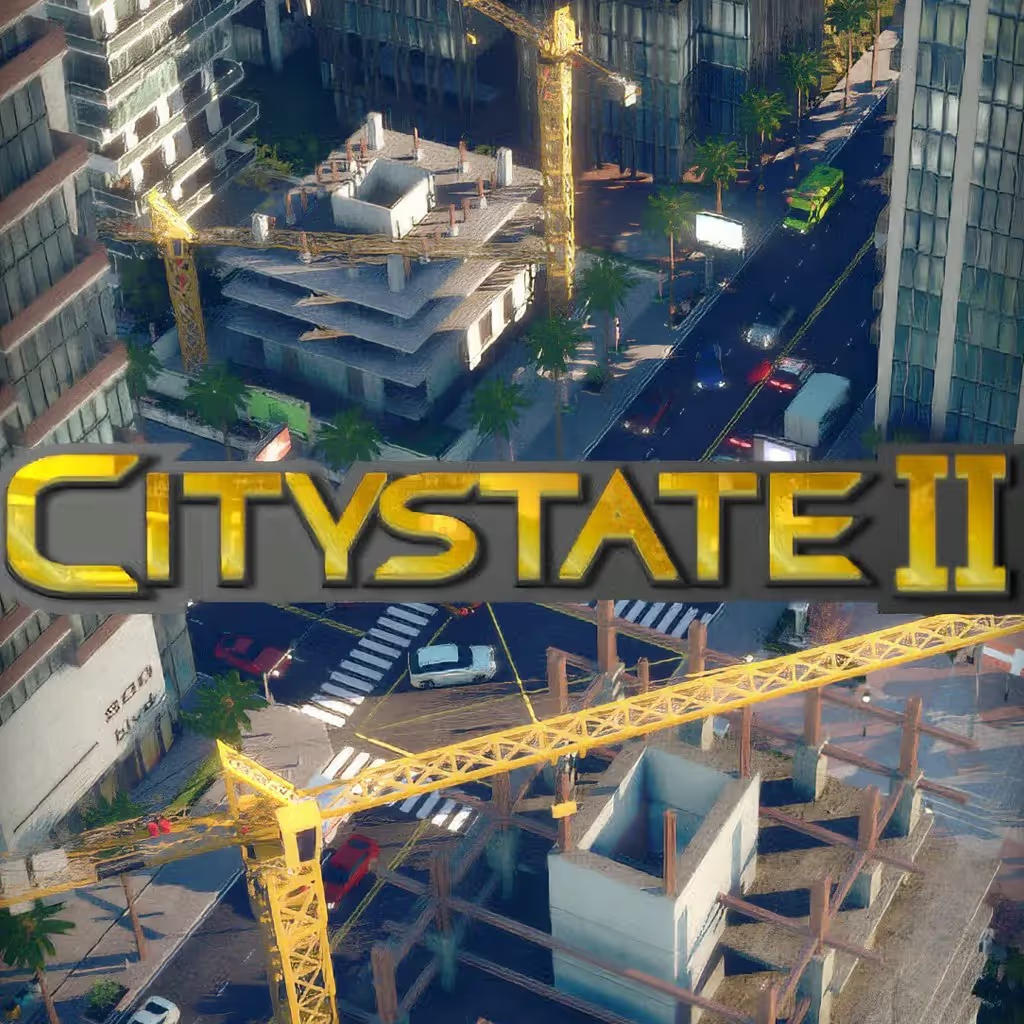
Citystate II is a political city-building simulation that blends urban planning with macroeconomic and policy management systems. Players design cities while simultaneously setting tax structures, social policies, and monetary strategies that influence population behavior. The core loop revolves around balancing infrastructure growth with economic stability and ideological direction. Its tone is analytical and system-heavy, prioritizing political modeling over visual spectacle or narrative guidance.

• The game is sold as a one-time premium purchase without microtransactions.
• There are no pay-to-win systems or live-service monetization layers.
• Post-release updates have focused on balancing and system refinements rather than paid expansions.
• The game is entirely single-player and designed around solo policy experimentation.
• All economic and political systems function independently of multiplayer interaction.
• Pacing and difficulty are fully controlled by the player.
• Progression is not gated by repetitive farming but by system mastery and economic balancing.
• Policy experimentation can require repeated economic adjustments after destabilizing decisions.
• There are no artificial grind walls, though recovery from poor planning can be time-consuming.
• Macroeconomic systems simulate inflation, unemployment, taxation, and political alignment in detail.
• Urban planning interacts directly with policy decisions, creating layered feedback loops.
• The interface can feel dense due to the amount of statistical data presented.
.avif)
.avif)
.avif)
Citystate II provides a dense political and economic simulation layered onto a city-building framework, emphasizing policy experimentation over visual immersion. The time commitment is moderate, with progression tied more to understanding interconnected macro systems than to repetitive grind mechanics. It functions entirely as a solo experience and rewards players who enjoy analyzing data and adjusting fiscal strategies, but its interface density and limited presentation polish can create friction. As a premium title without aggressive monetization, it offers fair value, though its niche focus and rough edges may narrow its audience.
• Players interested in political economy simulations rather than pure city aesthetics.
• Strategy enthusiasts who enjoy experimenting with taxation and policy systems.
• Solo players who prefer analytical and data-driven gameplay.
• Visual presentation and polish are limited compared to mainstream city builders.
• User interface density can be overwhelming.
• The niche focus on macroeconomics may limit broad appeal.
