Elden Ring: Nightreign is a cooperative spin-off set in the Elden Ring universe that focuses on survival-based gameplay. Players team up to face increasingly difficult enemies and bosses within a shifting world. Success depends on cooperation, adapting strategies, and surviving the dangers of each run.
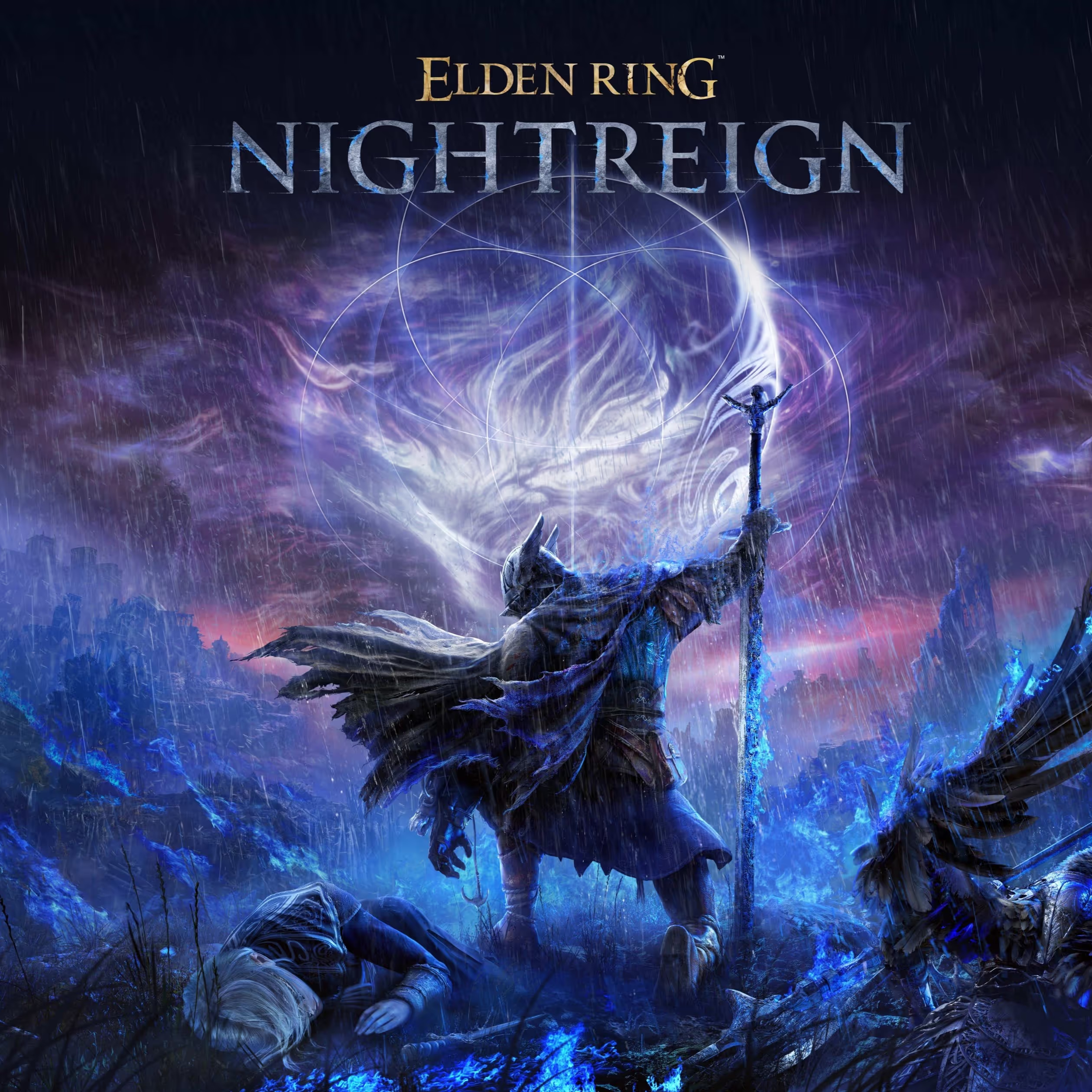

• The game is sold as a standalone premium title without a live-service pass structure.
• There are no pay-to-win systems affecting combat progression.
• Additional cosmetic content is optional and does not gate gameplay systems.
• The design centers on three-player cooperative runs with role synergy and shared objectives.
• Solo play is possible but significantly more punishing and less balanced.
• Matchmaking and coordinated teamwork are core to the intended difficulty curve.
• Progression is tied to repeated expeditions that reset after each run, encouraging replay for upgrades and unlocks.
• Character growth relies on unlocking relics, traits, and build options through successive clears.
• Higher difficulty tiers and late-game bosses require sustained repetition to optimize team compositions.
• Combat inherits Soulslike mechanics with stamina management, precise timing, and positional awareness.
•Roguelite layering introduces relic combinations and run-based build adaptation.
• Boss patterns demand mechanical mastery and coordinated execution in co-op.
.avif)
.avif)
.avif)
It delivers a focused cooperative experience built around difficult boss encounters, stamina-driven combat, and roguelite-style replay structure within the Elden Ring universe. The campaign length is moderate, but long-term engagement depends on repeated expeditions and higher-tier clears, creating a grind-heavy loop. The experience is tuned primarily for coordinated groups, with solo play feeling noticeably more punishing. As a premium standalone title without aggressive monetization, it offers solid value for players who want structured, replayable co-op challenges rather than a traditional open-world Soulslike journey.
• Players seeking challenging cooperative boss encounters in a structured format.
• Fans of Elden Ring who want a replayable session-based variant.
• Groups looking for high-difficulty runs that reward coordination and build synergy.
• The lack of a traditional open world may disappoint players expecting a full sequel-scale experience.
• Repetition is core to progression and can feel grind-heavy over time.
• Solo players will encounter higher friction compared to coordinated teams.
