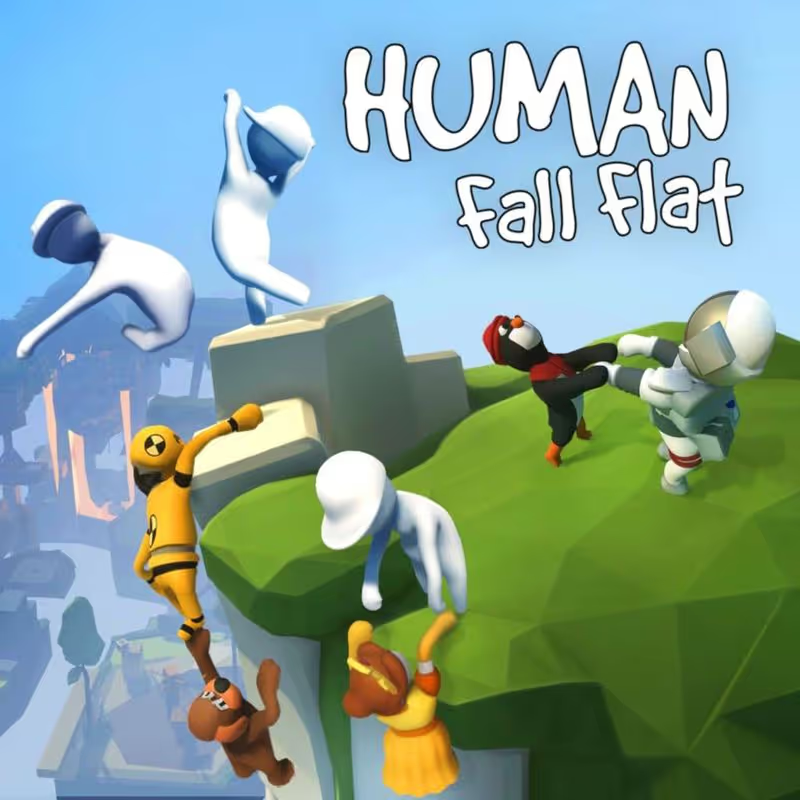
Human: Fall Flat is a physics-based puzzle platformer built around intentionally clumsy character movement and sandbox-style level design. Players manipulate objects, climb structures, and solve environmental puzzles using momentum and coordination rather than precise controls. The core loop revolves around experimentation, cooperative problem-solving, and physics-driven chaos across varied themed stages. Its tone is playful and unpredictable, prioritizing emergent humor over structured narrative progression.

• The game is a one-time premium purchase without pay-to-win systems.
• Post-launch levels have been added through updates without aggressive monetization.
• There are no live-service progression boosts or mandatory DLC layers.
• All levels can be completed solo with patience and experimentation.
• Co-op significantly enhances enjoyment through shared problem-solving.
• Some puzzles feel smoother with multiple players assisting physically.
• Progression is level-based without repetitive farming systems.
• Puzzle solutions rely on experimentation rather than resource grinding.
• Replay value comes from alternative solutions and co-op chaos rather than mandatory repetition.
• Core mechanics revolve around grabbing, climbing, and physics manipulation.
• Puzzles are intuitive and encourage creative experimentation.
• There are no layered skill trees or progression systems to manage.
.avif)
.avif)
.avif)
Human: Fall Flat delivers a short but highly replayable physics puzzle experience built around experimentation and emergent humor. The overall time commitment is modest, with minimal grind and straightforward progression across level-based challenges. While fully playable solo, the design clearly shines in cooperative sessions where shared problem-solving amplifies the chaos and creativity. As a premium release without aggressive monetization systems, it offers strong value for players seeking lighthearted, sandbox-style puzzle gameplay rather than structured narrative depth.
• Players looking for lighthearted cooperative puzzle sessions.
•Groups wanting a physics sandbox experience.
• Casual players seeking short, replayable levels.
• Controls are intentionally imprecise, which may frustrate some players.
• Solo play can feel slower and less dynamic.
• Limited narrative structure may reduce long-term engagement.
