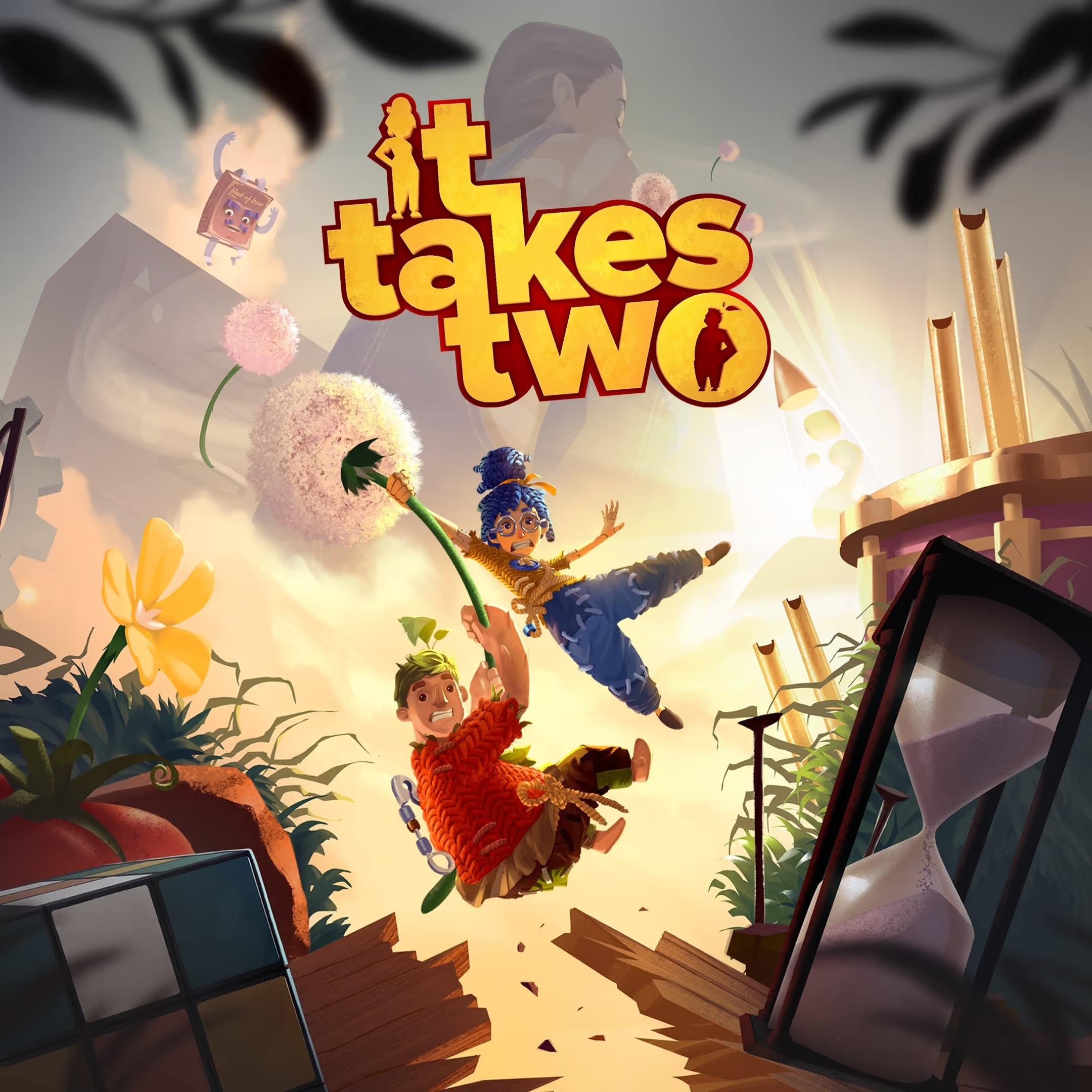
It Takes Two is a cooperative adventure designed specifically for two players. Players control a couple transformed into small dolls who must work together to overcome imaginative challenges and puzzles. Each level introduces unique mechanics that require teamwork and coordination.

• The game is sold as a single premium purchase with no microtransactions.
• The friend pass system allows a second player to join without buying an additional copy.
• There are no pay-to-win or gated gameplay systems.
• The game cannot be played solo and requires two active participants at all times.
• Online and local co-op are both supported, but a partner is mandatory.
• There are no AI companions to substitute for a second player.
• Progression is entirely story-driven with no need for resource farming or repetitive side activities.
• Levels introduce new mechanics frequently, reducing mechanical repetition.
• Optional minigames add variety rather than extending playtime through grind.
• Core mechanics are easy to grasp, with tutorials integrated into level design.
• Each chapter introduces new abilities that are intuitive but mechanically distinct.
• Challenge increases gradually without overwhelming players with systemic depth.
.avif)
.avif)
.avif)
It delivers a tightly designed cooperative adventure built entirely around two-player interaction, with constant gameplay variety and strong production values. The campaign is concise and free of grind, focusing on inventive level mechanics rather than progression systems. However, it is strictly dependent on having a reliable partner, as there is no solo mode or AI substitute. As a premium release with generous co-op access and no aggressive monetization, it offers strong value for pairs seeking a focused shared experience.
• Couples or friends wanting a narrative-driven cooperative adventure.
• Players who appreciate constant gameplay variety across genres.
• Fans of cinematic platformers with creative level design.
• It is unplayable without a committed second player.
• Replay value is limited once the story and set pieces are completed.
• The narrative tone may not resonate equally with all audiences.
