Kingdom Come: Deliverance II is an open-world RPG set in a realistic medieval world based on historical events. Players continue the story of Henry while navigating political conflicts, warfare, and personal struggles. The game emphasizes realism, immersive storytelling, and skill-based combat.
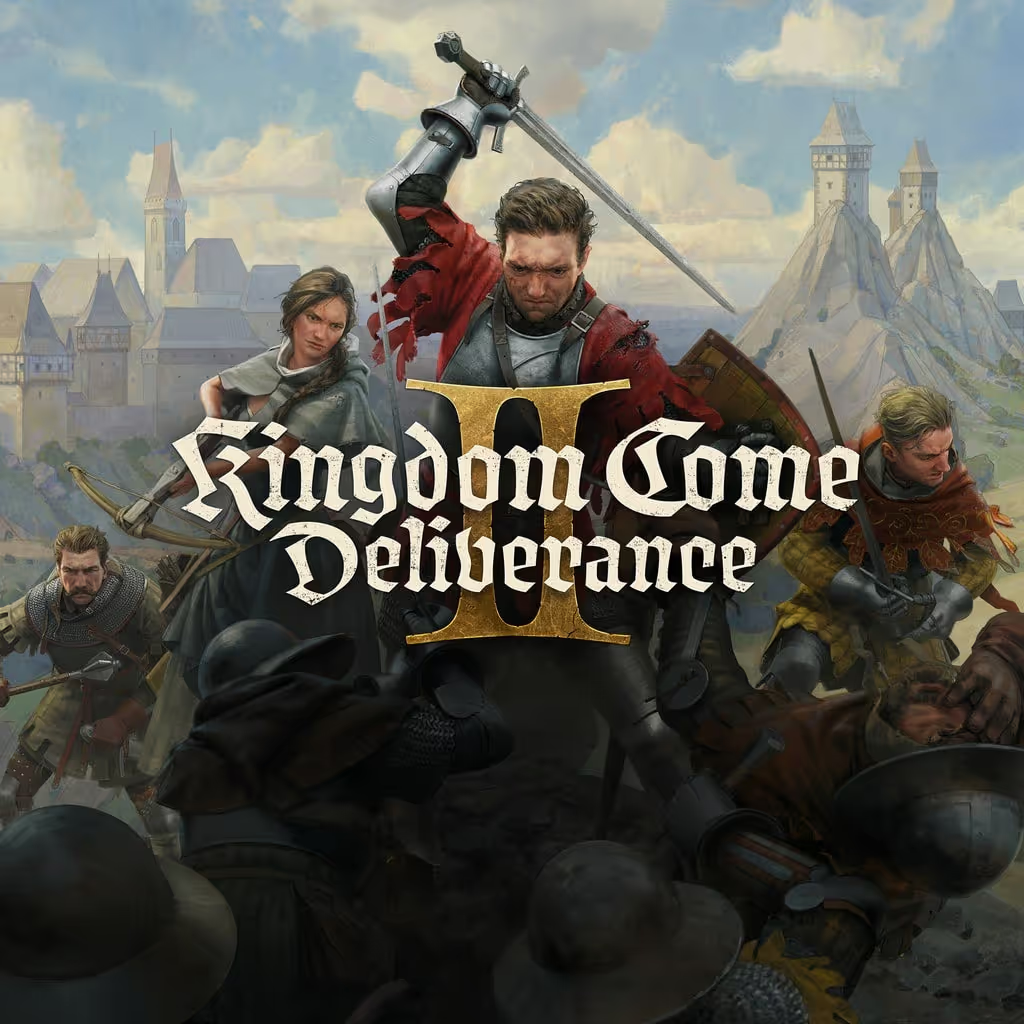

• The game is sold as a full-price premium release with substantial campaign content.
• There are no pay-to-win systems affecting gameplay progression.
• Additional content is positioned as optional expansions rather than fragmented core features.
• The entire experience is built as a single-player RPG with no multiplayer dependency.
• Questlines and systems are designed around personal decision-making and immersion.
• There are no co-op or online requirements for progression.
• Progression is tied more to skill usage and quest outcomes than repetitive farming loops.
• Combat mastery improves through practice rather than mandatory resource grinding.
• Side activities expand playtime but rarely hard-gate the main narrative behind level checks.
• Combat uses directional attacks, stamina management, and timing-based defense systems that demand learning.
• Survival elements such as hunger, equipment maintenance, and social reputation influence outcomes.
• Dialogue choices and quest branching create systemic consequences across regions.
.avif)
.avif)
.avif)
It delivers a dense and immersive medieval RPG that emphasizes realism, systemic combat, and meaningful quest design over spectacle. The campaign offers a substantial time commitment, with side content extending the experience without forcing excessive grinding. Combat and survival systems demand patience and mechanical learning, but they create a grounded sense of progression once mastered. As a fully solo experience with strong narrative cohesion and fair monetization, it provides strong value for players comfortable with its deliberate pacing and complexity.
• Players seeking a grounded medieval roleplaying experience with high immersion.
• Fans of systemic combat that rewards patience and mechanical learning.
• RPG enthusiasts who value quest branching and historically inspired world-building.
• Combat has a steep learning curve and can feel punishing early on.
• Realism systems may slow pacing for players wanting immediate power fantasy.
• The large world and dense quest structure can significantly extend playtime beyond the main story.
