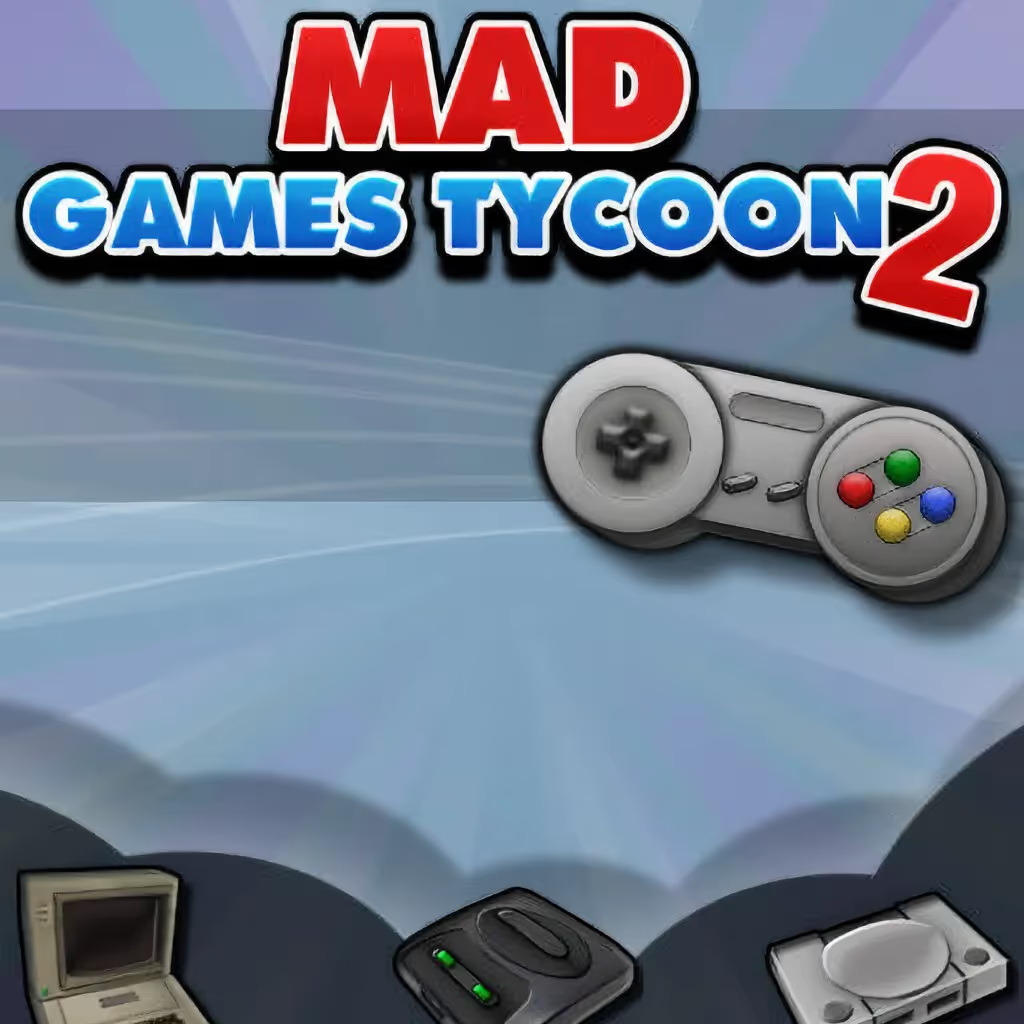
Mad Games Tycoon 2 is a business simulation where players build and manage their own video game development studio. Players design games, research new technologies, and grow their company over several decades. Success depends on managing staff, creating successful titles, and adapting to industry trends.

• It is a one-time purchase with no pay-to-win mechanics.
• There are no intrusive microtransactions affecting progression.
• Post-launch updates have expanded content without altering the core model.
• The experience is entirely single-player with no multiplayer modes.
• All systems are built around solo strategic planning and long-term oversight.
• Sandbox and campaign modes function independently without online requirements.
• Progression spans multiple in-game decades with iterative game releases and staff expansion.
• Optimization requires repeated product cycles to refine genre combinations and technology levels.
• Late-game growth involves sustained financial micromanagement and production scaling.
• Game design systems track genre combinations, target audiences, and platform trends.
• Hardware development and engine customization add layered strategic planning.
• Staff management includes skill specialization, salaries, and production pipelines.
.avif)
.avif)
.avif)
Mad Games Tycoon 2 delivers a deep studio management simulation built around iterative game development, hardware production, and long-term financial optimization across multiple in-game decades. The time commitment is effectively open-ended, with heavy grind emerging from repeated development cycles and sustained micromanagement rather than forced progression gates. It operates entirely as a solo experience and maintains a clean premium model, making it particularly appealing to players who value systemic depth and numerical optimization over narrative structure or fast-paced gameplay.
• Players who enjoy data-driven management simulations.
• Fans of building and optimizing long-term business empires.
• Those interested in recreating the evolution of the video game industry.
• Interface density can overwhelm new players.
• Repetitive product cycles may reduce variety over extended sessions.
• Presentation focuses on spreadsheets and menus rather than visual spectacle.
