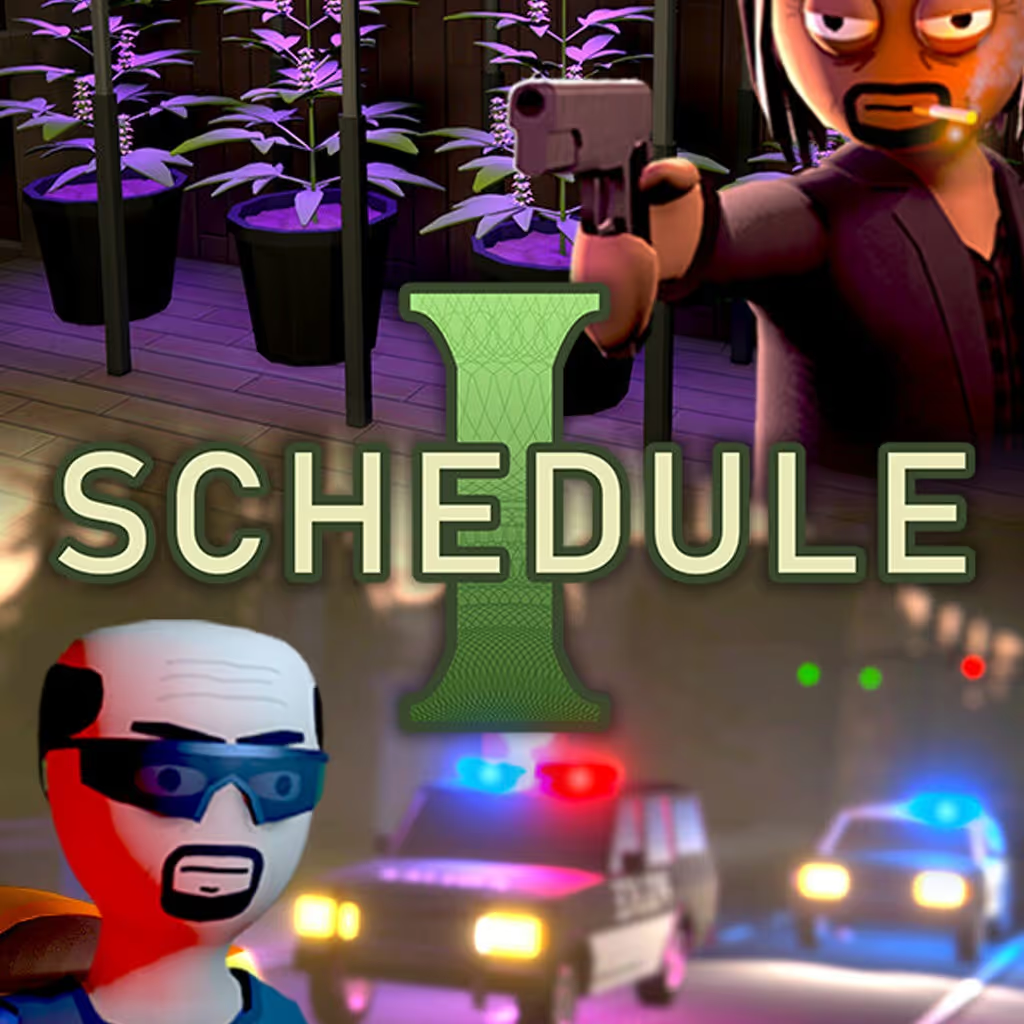
Schedule I is a crime-themed simulation game where players build and manage an illegal drug empire. Players produce substances, manage distribution networks, and expand their operations while avoiding law enforcement. Strategy, resource management, and risk-taking determine success.

• The game is sold as a paid early access title without pay-to-win mechanics.
• There are no aggressive microtransaction systems affecting progression.
• Value depends on tolerance for evolving systems and unfinished polish.
• The game can be played entirely solo with full access to systems and progression.
• Co-op enhances efficiency but is not mandatory for advancement.
• Difficulty scaling allows solo players to expand at their own pace.
• Progression relies on repeated production cycles, territory expansion, and reinvestment of profits.
• Unlocking new systems and scaling operations requires sustained repetition of core economic loops.
• Late-game growth centers on optimization and efficiency rather than narrative progression.
• Economic systems involve supply chains, risk management, and territory control mechanics.
• Players must balance production, distribution routes, and law enforcement pressure.
• Optimization becomes increasingly layered as operations scale.
.avif)
.avif)
.avif)
It provides a systemic sandbox focused on scaling a criminal enterprise through production, distribution, and territorial control. The experience is driven by repeated economic loops and optimization, making it a longer-term commitment built on efficiency rather than narrative progression. It functions well as a solo simulation but benefits from cooperative play when pushing into larger operations. As an early access premium title without aggressive monetization, it offers solid value for players comfortable with repetition and evolving systems.
• Players who enjoy building and optimizing criminal enterprise simulations.
• Co-op groups looking for a sandbox economy to scale together.
• Fans of risk-reward loops and territory control mechanics.
• Core progression can feel repetitive over long sessions.
• Early access status means balance issues and incomplete systems are possible.
• Lack of structured narrative may reduce long-term engagement for story-focused players.
