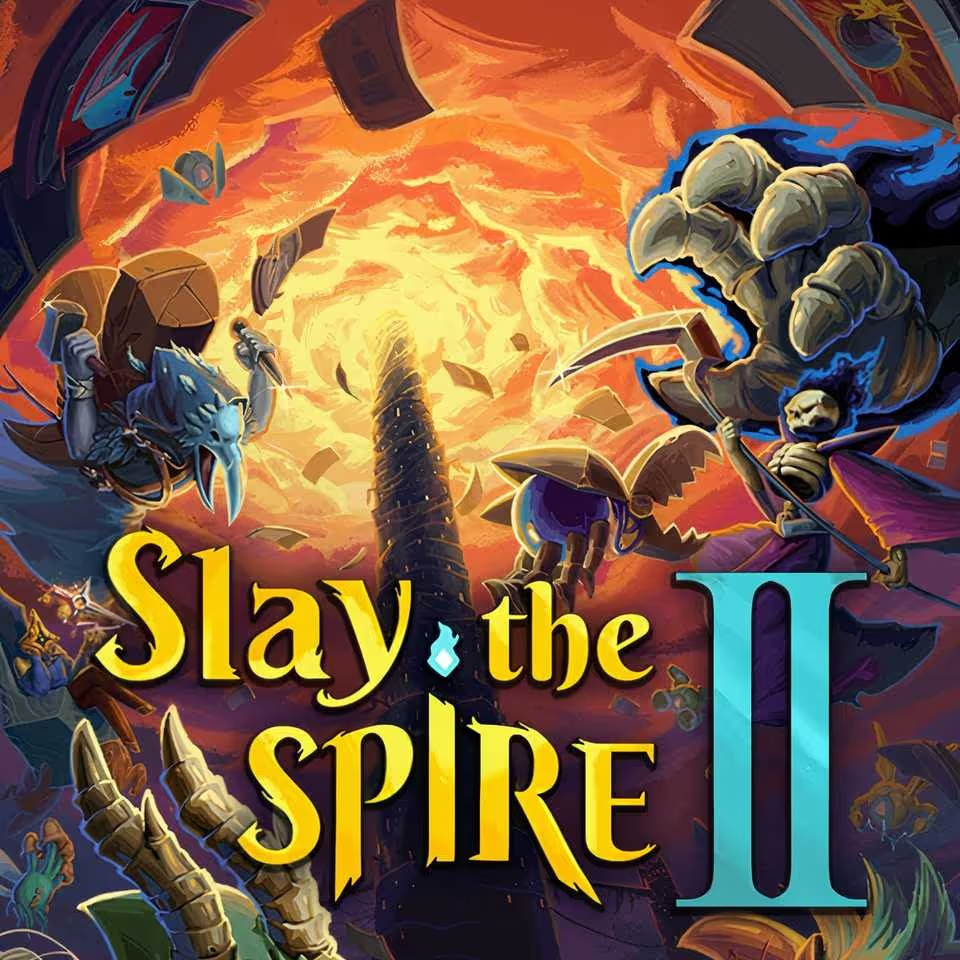
Slay the Spire 2 is a roguelike deck-building RPG where players climb a procedurally generated tower by building powerful card decks and defeating enemies in turn-based battles. Each run revolves around drafting cards, collecting relics, and adapting strategies based on unpredictable encounters. The sequel expands the original formula with new characters, deeper card synergies, and redesigned enemy encounters. Its structure remains highly replayable, emphasizing experimentation and strategic planning over narrative progression.

• The game is sold as a premium purchase without pay-to-win systems.
• There are no gameplay advantages sold through microtransactions.
• The content volume and replayability provide strong value relative to the purchase price.
• The entire design is built around single-player runs with no reliance on multiplayer systems.
• Players can pause runs freely and progress at their own pace.
• Strategic decisions rely entirely on player skill rather than coordination with other players.
• Progression is run-based rather than grind-based, meaning players unlock new content naturally through repeated attempts.
• Runs typically last under an hour, allowing players to experiment with new decks without heavy time investment.
• Difficulty scaling through ascension levels adds challenge without forcing repetitive grinding.
• Deckbuilding revolves around card synergies, relic combinations, and careful resource management.
• The UI clearly explains card interactions, which keeps the learning curve manageable.
• Most mechanics are introduced gradually, making the game approachable even for newcomers.
.avif)
.avif)
.avif)
Slay the Spire 2 successfully builds on the original formula with deeper deckbuilding systems, new characters, and refined encounter design. The progression loop avoids heavy grinding because each run stands on its own while gradually unlocking more strategic possibilities over time. Its solo-focused structure makes it highly accessible for players who want a strategic RPG experience without multiplayer pressure, and the premium pricing model keeps monetization clean and fair. For players who enjoy highly replayable roguelike strategy games, it offers a long-term experience built around experimentation and mastery.
• Players who enjoy strategic deckbuilding and planning several turns ahead.
• Fans of roguelike RPG progression with high replayability.
• Players looking for a solo strategy game that rewards experimentation.
• Runs can end abruptly due to RNG encounters or unlucky card draws.
• Players expecting a story-driven campaign may find the structure repetitive.
• Those unfamiliar with deckbuilders may initially struggle with card synergy decisions.
