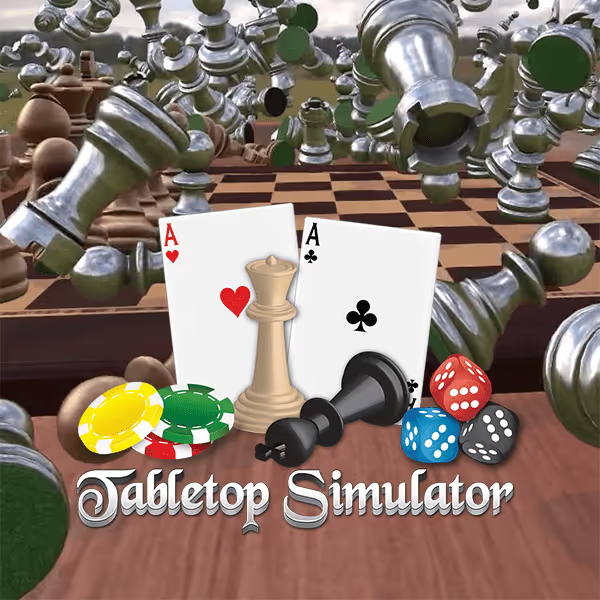
Tabletop Simulator is a physics-based sandbox that recreates tabletop gaming in a virtual environment. The gameplay loop revolves around loading board games, card games, and custom creations onto a virtual table where players interact with pieces using realistic physics. The platform supports a wide range of classic tabletop games while also allowing users to import and create their own content. Its structure focuses on multiplayer tabletop experiences and mod-driven community content.
• The base game is sold as a premium purchase.
• Official DLC packs provide licensed tabletop games.
• Community workshop content offers thousands of free user-created games.
• Many tabletop games require multiple players to function properly.
• Solo play is possible but limited to games designed for single players.
• The experience is primarily designed for multiplayer sessions.
• The game contains no progression or leveling systems that require grinding.
• Players load and play board games freely without long-term progression loops.
• Community content allows instant access to many different tabletop experiences.
• The core mechanics involve interacting with objects through physics-based controls.
• Players manually manage cards, pieces, and boards similar to real tabletop play.
• Learning specific games often depends on external rulebooks rather than in-game tutorials.
.avif)
.avif)
.avif)
Tabletop Simulator offers a flexible sandbox for playing and creating tabletop games within a physics-driven virtual environment. The platform avoids grinding entirely because it functions as a toolkit rather than a progression-based game. While solo play is possible, the experience is primarily designed for multiplayer sessions where players interact with boards, cards, and pieces together. Despite a somewhat clunky interface and limited built-in tutorials, the massive library of community-created games makes it one of the most versatile tabletop platforms available.
• Players who enjoy board games and tabletop experiences.
• Groups looking to play tabletop games remotely online.
• Players interested in creating or modding custom tabletop games.
• The interface can feel clunky compared to automated digital board game adaptations.
• Many games require learning rules outside the game itself.
• Solo play options are limited compared to multiplayer sessions.
