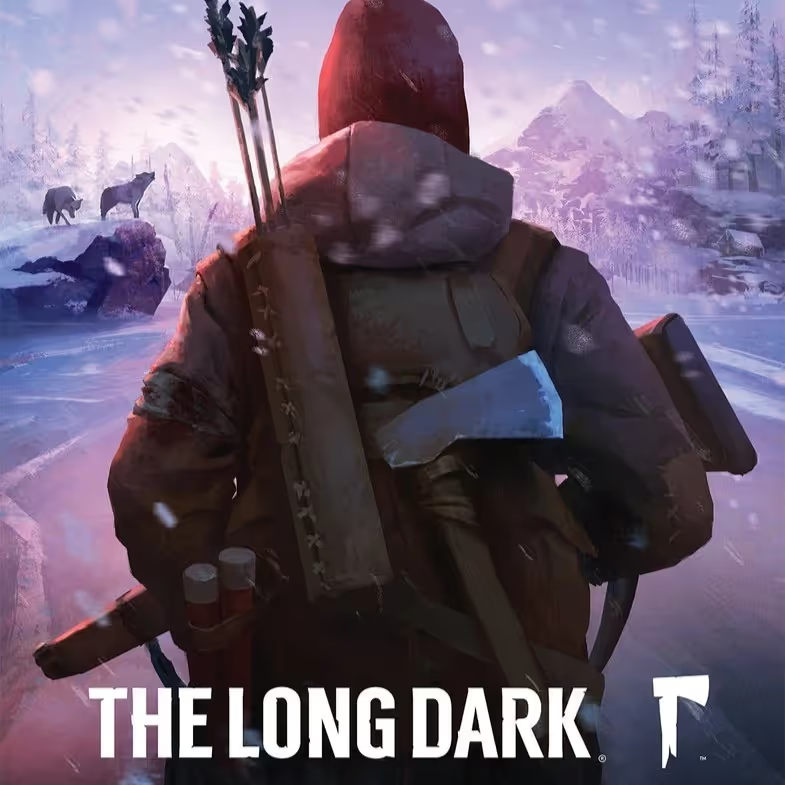
The Long Dark is a survival game set in the frozen wilderness after a global disaster. Players must manage warmth, hunger, and fatigue while exploring abandoned locations and gathering supplies. The game focuses on atmosphere, resource management, and long-term survival.

• It is a one-time purchase with optional paid expansion content.
• There are no pay-to-win systems or intrusive microtransactions.
• Ongoing updates have expanded survival and story content over time.
• The game is entirely single-player with no multiplayer modes.
• All survival systems are designed around isolated decision-making.
• Difficulty settings allow tailored survival intensity without cooperative reliance.
• Survival progression depends on careful resource gathering and long-term planning.
• Permadeath sandbox runs can require significant repetition after failure.
• Weather systems and wildlife threats create sustained pressure over extended play sessions.
• Layered survival systems track temperature, fatigue, hydration, and injuries.
• Crafting and long-term shelter planning require strategic foresight.
• Environmental storytelling unfolds without heavy quest markers.
.avif)
.avif)
.avif)
The Long Dark delivers a demanding survival experience centered on environmental danger, resource scarcity, and long-term planning rather than fast-paced action. The time commitment can become extensive, particularly in sandbox modes where permadeath and harsh weather systems introduce repeated tension and repetition. It functions entirely as a solo experience and maintains a clean premium model, making it best suited for players who appreciate methodical survival mechanics and atmospheric isolation over cooperative play or rapid progression.
• Players who enjoy realistic survival tension and resource scarcity.
• Fans of atmospheric wilderness settings with minimal handholding.
• Those willing to invest time mastering layered survival mechanics.
• Pacing is slow and can feel punishing for new players.
• Permadeath modes can result in repeated early-game restarts.
• Combat is minimal and not a primary focus of the experience.
