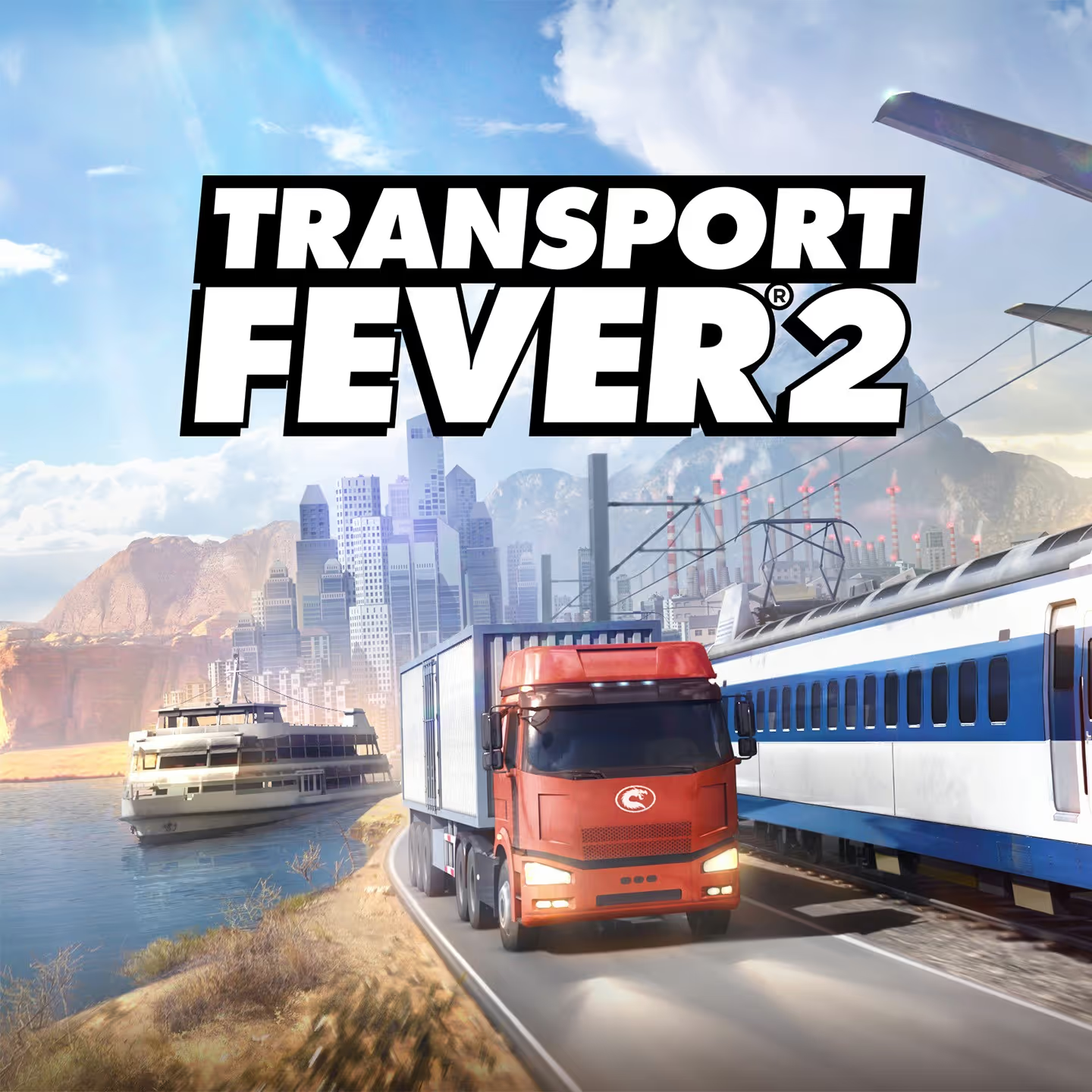
Transport Fever 2 is a transport management simulation where players build and optimize networks for trains, trucks, ships, and aircraft across evolving historical eras. The gameplay loop revolves around constructing routes, managing logistics chains, and balancing profitability while expanding infrastructure. Players connect industries and cities to create efficient supply systems that grow over time. The experience focuses on detailed management, optimization, and long-term economic planning.

• The game is sold as a premium purchase.
• Additional content is available through optional DLC.
• There are no microtransactions affecting gameplay.
• The game is designed entirely as a single-player simulation.
• Players build and manage transport networks independently.
• There are no multiplayer requirements.
• Progression is driven by expanding and optimizing transport networks rather than repetitive grinding.
• Income generation becomes automated as efficient routes are established.
• Most time is spent on planning and improving systems rather than farming resources.
• Players must manage logistics chains, route efficiency, and financial systems.
• Network optimization requires understanding supply and demand interactions.
• The game offers tools and tutorials but still requires learning through experimentation.
.avif)
.avif)
.avif)
Transport Fever 2 delivers a detailed transport management simulation focused on building and optimizing large-scale logistics networks. Progression remains smooth because systems become increasingly automated as efficient routes are established rather than requiring repetitive grinding. The game is strongly solo-focused and offers deep strategic planning for long-term growth. While its complexity and learning curve may deter some players, it remains a strong option for those interested in detailed simulation and infrastructure management.
• Players who enjoy transport and logistics simulations.
• Fans of long-term management and optimization gameplay.
• Players interested in building complex infrastructure systems.
• The learning curve can be steep for new players.
• Late-game management can become complex and time-consuming.
• Performance may decrease with very large transport networks.
